Genetic Architectures of the Gut-Brain-Immune Axis in Autism
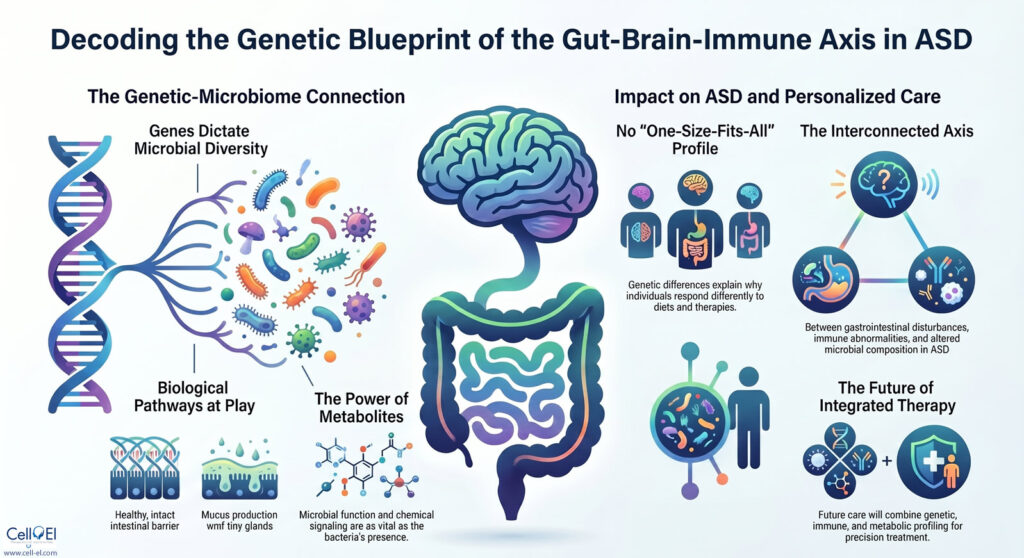
Researchers are also looking beyond which bacteria are present to understand what those microbes are doing. Microbial metabolites can influence inflammation, immune regulation, cellular signaling, and communication between the gut and brain. Several studies have identified differences in microbiome-derived metabolites and microbial community structure in individuals with ASD, suggesting that microbiome function may be as important as composition.
One major implication is that there may not be a single microbiome profile associated with ASD, or one intervention that works for everyone. If genetics influence the microbiome, they may also help explain why individuals respond differently to dietary changes, probiotics, microbiome-based therapies, stem cell therapies, and other emerging approaches.
Cell-El is looking ahead. Future strategies may combine microbiome analysis, genetic information, immune profiling, and metabolic biomarkers to better understand each person’s biology. While the relationship between genetics, the microbiome, and ASD is still being explored, research continues to support the gut’s important role in human health, neurodevelopment, and personalized therapeutic approaches.
Help Us Help You
Better diagnostics for ASD based on laboratory-measured objective biomarkers can possibly enable researchers and clinicians to provide more precise and personalized treatment. You too can make a difference in the lives of children with ASD and their families by joining the Cell-El study. Cell-El is recruiting the following cohorts: High risk infants aged 10-18 months and their mothers; 2-12 year olds who are typically developing, or with autism; 2-18 year olds pre and post Stem Cell Therapy (SCT). Please note: At this time we are only recruiting participants residing in Israel.
Please contact Leah at [email protected] or fill out the form to find out about eligibility to participate in our diagnostic study and please help spread the word about the Cell-El study. Sharing our study will enable our important biomarker diagnostic tool to be integrated into autism treatment as quickly as possible.
Disclaimer: This content is for informational purposes only and does not constitute medical advice or treatment recommendations. Cell-El Therapeutics Ltd. does not endorse any specific therapies mentioned. Always consult a qualified healthcare professional before making medical decisions. Read more
References
- Moksnes MR, Coward E, Nethander M, et al. The HUNT study identifies host genetic factors reproducibly associated with human gut microbiota composition. Nature Genetics. 2026;58:530–539. https://doi.org/10.1038/s41588-026-02502-4.
- Yap CX, Henders AK, Alvares GA, et al. Autism-related dietary preferences mediate autism-gut microbiome associations. Cell. 2021;184(24):5916–5931.e17. https://doi.org/10.1016/j.cell.2021.10.015.
- Needham BD, Adame MD, Serena G, et al. Plasma and Fecal Metabolite Profiles in Autism Spectrum Disorder. Biological Psychiatry. 2021;89(5):451–462. https://doi.org/10.1016/j.biopsych.2020.09.025
- Infographic: AI-assisted visualization based on the above referenced scientific literature.